


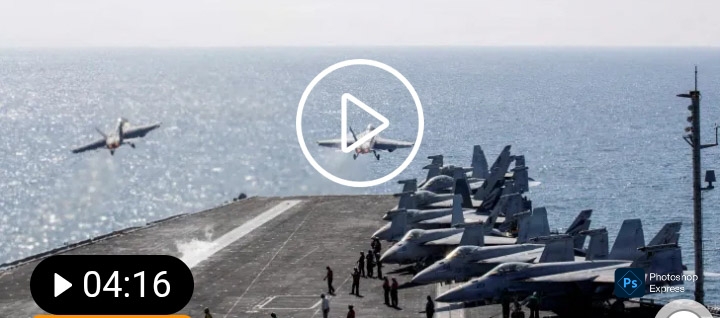
The United States military has conducted “limited defensive” strikes against Iranian targets in the Strait of Hormuz following surface-to-air missile threats against US assets, according to the Associated Press.
US Vice President JD Vance said Washington has made “progress” in indirect peace talks with Iran, while Tehran insists the US must lift its naval blockade and meet its demands before any agreement is reached.
Iran’s Islamic Revolutionary Guard Corps (IRGC) says two crude oil tankers caught fire after hitting sea mines in the Strait of Hormuz as Gulf nations condemn Friday’s attack on a Qatari liquefied natural gas (LNG) carrier.
Yemen’s internationally recognised government forces say one soldier has been killed and 14 others wounded while repelling a Houthi attack in the governorate of Taiz.
Washington and Tehran have signalled both an openness to diplomacy and a readiness for further military action, as mediated talks between the two sides continue. But can negotiations prevent a wider escalation in a region critical to global energy supplies?
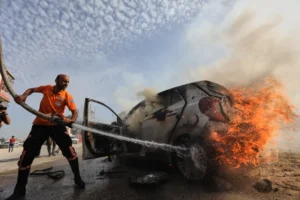
So far, there have been five explosions on Iran’s Qeshm Island. In previous rounds of war, it has been hit several times because it’s a strategic island.
It’s the biggest in the Gulf and it overlooks the Strait of Hormuz. It also has radar systems, missile launchers and some other military facilities.
US media say the strikes targeted some of the radars and missile launchers.
It’s interesting to note that while these strikes have been confirmed by sources, officially neither the Iranians nor the Americans have confirmed that there have been attacks.