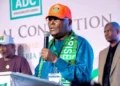



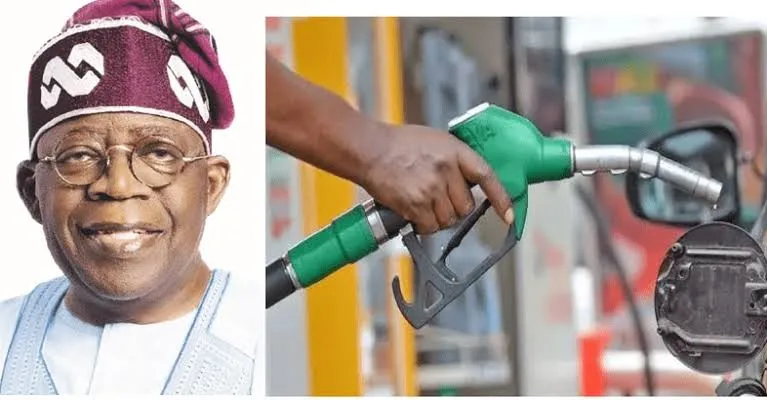
The Presidency has stated that the call by former Vice-President Atiku Abubakar to return Nigeria to the era of fuel subsidy will undermine the reforms already undertaken in the petroleum sector.
The Presidency also said that it will create legal and fiscal complications, and potentially discourage investment in domestic refining, including the Dangote Refinery and other modular refineries.
Disclosing this in a series of posts by Special Adviser to the President on Information and Strategy, Bayo Onanuga, called Atiku’s plan as retrogressive, fiscally unsustainable and a product of “desperation to win the presidency”.
He stated that the petroleum landscape in Nigeria had changed fundamentally since President Bola Tinubu announced the removal of petrol subsidy.
Also speaking, Minister of Finance and Coordinating Minister of the Economy, Taiwo Oyedele, said the removal of petrol subsidy had generated N15.8 trillion in resources for the federation between June 2023 and December 2025.
Oyedele said that N5.4 trillion accrued to the Federal Government, while N10.4 trillion has been shared among states and local governments.
A financial expert and President of the Capital Market Academics of Nigeria (CMAN), Prof. Uche Uwaleke, said that the debate should go beyond the immediate attraction of cheaper petrol.
According Uwaleke, Nigeria should be more concerned about the most economically sustainable way to use the country’s scarce public resources to improve the welfare of citizens over the long term.
He said that the old subsidy regime had become an enormous burden on public finances while also creating significant opportunities for arbitrage, smuggling, rent-seeking and other sharp practices.
“The success of subsidy removal should not be measured simply by whether government stopped paying the subsidy.
“It should be measured by whether it succeeded in converting that difficult sacrifice into a more productive economy, stronger public services, increased domestic production and a better quality of life for the ordinary Nigerian,” he said.
Prof. Ken Ife, a prominent global financial analyst and development economist, faulted the political rhetoric of simply returning to a blanket fuel subsidy system to lower pump prices.
Ife said that Nigeria could not solve its deep-seated fuel and economic crises through artificial price-slashing at the point of sale.
According to him, returning to the old consumption-driven subsidy regime would re-introduce the distortions, inefficiencies, and massive fiscal leaks that historically crippled the country’s economy.
“In broad macroeconomic terms, and even in development economies, you do not subsidise consumption. What you subsidise is production.
“You cannot borrow money to pay for subsidy. That is unlawful when you consider Fiscal Responsibility Act. It does not recognise that as a legitimate expenditure or as a legitimate borrowing,” he said.
A civil servant, Ibrahim Abbas, said that Nigerians had expected that the removal of petrol subsidy would provide enough revenue to allow the Federal Government accelerate the development and upgrade of critical infrastructure to boost economic growth.
“The only thing we civil servants have experienced since subsidy was removed is economic hardship and a huge depletion of the purchasing power of the Naira.
“The implementation of the new minimum wage is still shrouded in confusion, and all these make Atiku’s proposal attractive to ordinary Nigerians ” he said
A retired civil servant, Mr Sule Aliu, said that the economy had been particularly harsh on retirees since 2023 when petrol subsidy was removed. (NAN)