



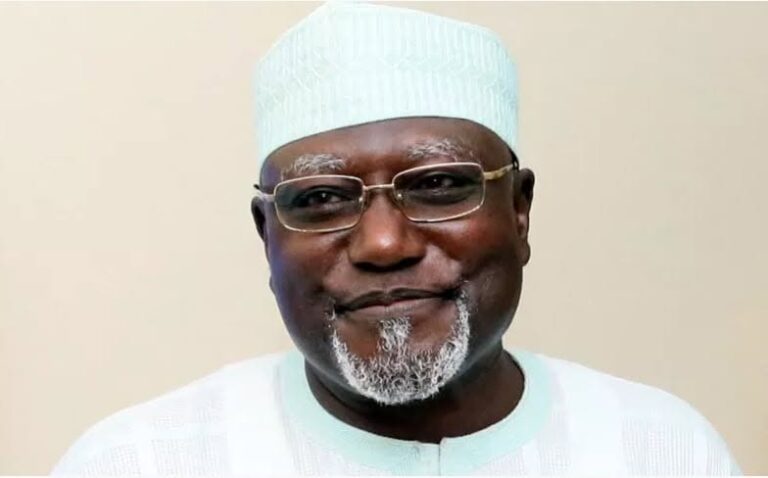
More revelations are coming out of the time of the presidency of late Muhammadu Buhari, as the former director-general of the Department of State Services (DSS), Lawal Daura, said the former President was surrounded by sycophants who betrayed the trust he placed in them and took advantage of his administration.
Daura, who disclosed this during an interview on Channels Television’s Politics Today, stated that those criticising the government of Buhari as the worst in the history of Nigeria should check the country’s political history between 1995 and 2023 before coming to such a conclusion.
Daura, who is the vice-presidential candidate of the Allied Peoples Movement (APM) in the 2027 general elections, stated that his duty as intelligence chief meant that he had to remain close to Buhari, adding that he stood by the former president and protected his administration.
“Yes, they can say it, but I also want them, the real students of history, to go back from 1995 to 2023, when he exited, and find out which were the worst years. I wasn’t part of the government then,” he said.
“And that will show you that I stood by him and I protected that government. Everything started to give way after 2018 since I left office.”
Daura stated that Buhari was surrounded by sycophants, claiming that he knew some of them and was aware of what they did.
Daura added that he knows “the details of what they have done” and rejected the suggestion that he was part of a so-called cabal around the late former president.
“No, there is no cabal,” he said.
“Even if there was a cabal, the intelligence chief of a country can never be part of a cabal because the schedule I handled made it necessary for me to be close to the president at all times.”
According to Daura, the people he described as sycophants did not “necessarily” misdirect Buhari but instead betrayed the trust the former president placed in them
Daura said Buhari’s administration “ultimately” suffered because people were entrusted with responsibilities without sufficient consideration of their suitability for the positions.
“And even if you are to do that, you must also weigh the quality of that person and then maybe place him in an office that befits him or is proportionate to maybe the level of trust you have in that person.
“But in that situation, an unfortunate situation, I would say, it so happened that people were just, you know, trusted.”