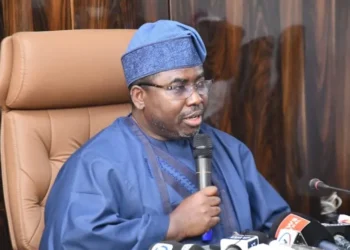



US state department officials have said Nigeria has been taking a more serious approach to tackling religious violence since its designation as a country of particular concern (CPC).
President Donald Trump redesignated Nigeria a CPC over allegations of a Christian genocide before following up with a missile strike in Sokoto on December 25.
Nigeria and the US have since struck a military partnership aiming at terrorists in the nation’s massive northern region and established a joint working group aimed at addressing Washington’s concerns over religious violence in the country.
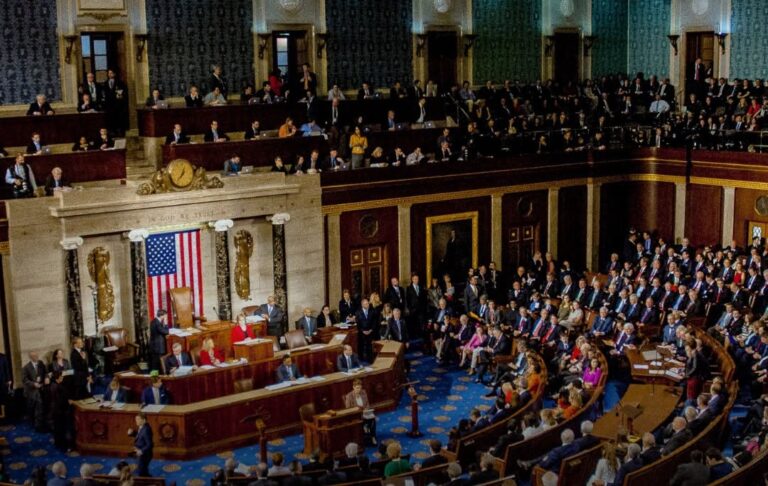
On Thursday,, chairman of the US house foreign affairs Africa sub-committee,
Chris Smith, led a congressional hearing on Nigeria’s response to attacks on vulnerable communities since the CPC designation.
Delivering his assessment on the matter, assistant secretary, bureau of African affairs at the state department,Frank Garcia told Congress the department has worked intensively with Nigerian officials to confront the persecution of Christian communities and to hold perpetrators accountable.
Garcia stated that while the violence had not stopped, diplomatic engagements with the Nigerian government were ongoing.
“We are expecting results — protection for Christian communities in the Middle Belt through increased Nigerian security and law enforcement deployments, more timely and effective responses to early warnings of impending attacks, accountability for perpetrators through stronger courts and security services, and deeper military-to-military cooperation,” he said.
Garcia stated that the US was adopting a unified approach to building Nigeria’s security through capacity building, expanded use of biometric data to identify perpetrators, and financial action plans to disrupt terrorist financing networks.
“Though Nigeria has reported progress, under Secretary Hooker made it clear in the joint working group second session that this pace is insufficient,” he said.
Assistant secretary, bureau of democracy, human rights, and labour at the state department, Riley Barnes said US authorities had been pressing the Nigerian government to repeal blasphemy laws, or at a minimum, to move to non-enforcement.
He said Trump’s re-designation of Nigeria as a CPC has resulted in the West African country taking “these issues more seriously”.
“The government has reported leadership changes, strategically deployed military forces, and increased arrests and prosecutions,” Barnes said.
“They’ve agreed to report more transparently on spending for displaced people and to develop a plan and timeline for returning internally displaced persons safely and securely to their ancestral lands.
“But our chief goal remains an end to attacks and violence. The US has been clear that the measure of success will be simply fewer attacks and less violence, and importantly, demonstrable progress in holding the individuals who carry out attacks accountable. Abuja carries the burden of proof, and there is still more work to be done.”
Director and senior fellow of the African program, Center for Strategic and International Studies, Oge Onubogu, said it was important for attacks in Nigeria to be confronted “honestly and unequivocally”.
“The evidence does not support treating Christians as the sole victims of Nigeria’s violence or reducing the complex insecurity of the middle belt to a single explanation based on religion,” Onubogu said.
“Muslim communities have also suffered devastating attacks. Religious identity can intersect with ethnicity, land, and resource disputes, political competition, livelihoods, criminality, governance failures, and longstanding local grievances.”
Onubogu stated that the CPC designation should serve as a policy tool rather than a substitute for policy itself.
Smith opposed lifting the designation, saying it should remain in place until the US sees concrete progress from Nigeria.